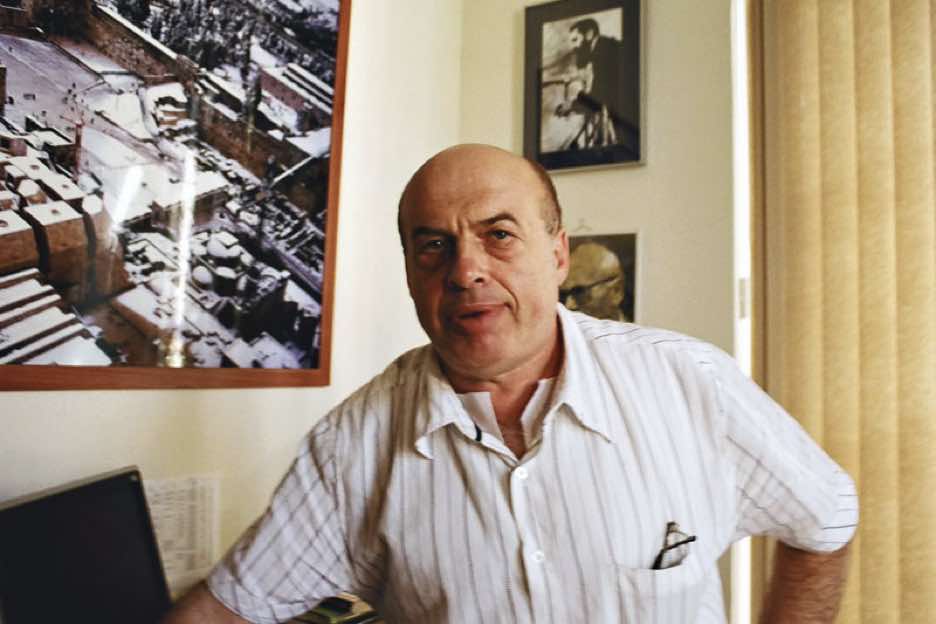
I first met Natan Sharansky in the early 1990s, when he was president of the newly formed Zionist Forum, the umbrella organization representing former Soviet Jewish activists. At the time, he also served as an associate editor of The Jerusalem Report, where he wrote frequently and insightfully on issues of human rights, freedom, and Jewish identity.
I was introduced to him following a speaking engagement in Birmingham, Alabama, where he spoke with remarkable passion about his imprisonment and his long struggle for human rights—both for Soviet Jewry and for oppressed peoples everywhere. In his mid-forties then, Sharansky was energetic, approachable, and instantly engaging. I was struck not only by the power of his story, but by the quiet resolve and optimism that seemed to define him.
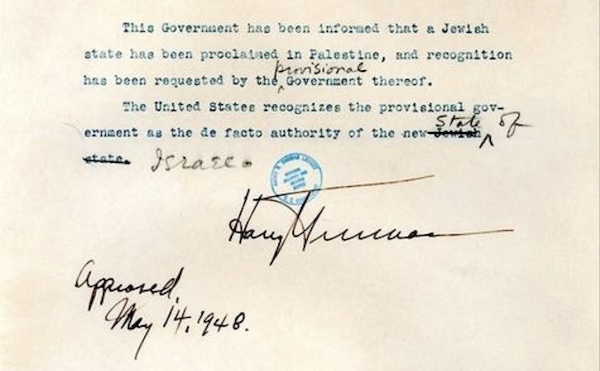
Sharansky’s life story begins four months before the declaration of the State of Israel in 1948. He was born Anatoly Borisovich Shcharansky in Stalino, in the Soviet Union—today known as Donetsk, Ukraine—where his father worked as a journalist for a Communist Party newspaper. A gifted student, Sharansky graduated from the prestigious Moscow Institute of Physics and Technology in 1972 and went on to work as a computer scientist at the Oil and Gas Research Institute.
That same year, he and his future wife, Avital Stieglitz, made the life-altering decision to immigrate to Israel. They applied for exit visas, a routine step in theory but a perilous one in the Soviet Union. Avital’s request was approved. Sharansky’s was not.
The official explanation was that he had once been given access to information deemed vital to Soviet national security and therefore could not be permitted to leave. In reality, his growing activism on behalf of Jewish emigration rights almost certainly played a role. Sharansky soon joined the ranks of the “refuseniks”—Soviet Jews denied permission to emigrate and often punished for asking.
In 1974, Anatoly and Avital married just a day and a half before her exit visa expired. The morning after their wedding, Avital left for Israel. Anatoly remained behind, believing his permit would follow shortly. It never did.
Instead, he plunged headlong into activism. Sharansky became deeply involved in the Soviet Jewry movement and joined the broader human rights struggle led by physicist and dissident Andrei Sakharov. He was a founding member of the Moscow Helsinki Group, which united dissidents of many backgrounds to monitor Soviet compliance with international human rights agreements. Before long, Sharansky emerged as an unofficial spokesperson for both the Jewish emigration movement and the broader dissident community.
The Soviet response was swift and brutal. In 1977, a state-controlled newspaper accused him of collaborating with the CIA. On March 15 of that year, Sharansky was arrested and charged with high treason and espionage on behalf of the United States. In 1978, after a show trial, he was sentenced to thirteen years of imprisonment, much of it to be served in a Siberian forced-labor camp.
Standing in the courtroom before his sentence was announced, Sharansky delivered a statement that would echo around the world: “To the court I have nothing to say; to my wife and the Jewish people I say, ‘Next year in Jerusalem.’”
For the first sixteen months of his incarceration, he was held in Moscow’s notorious Lefortovo Prison, often in solitary confinement and at times in a so-called “torture cell.” He was later transferred to a brutal prison camp in the Siberian gulag. Over the course of nine years behind bars—nearly half of them spent in isolation—his health deteriorated to the point that his life was repeatedly endangered.
Yet Sharansky endured. A chess prodigy since childhood—he won the chess championship of his native Donetsk at age fifteen—he later said that he preserved his sanity by playing entire chess games against himself in his mind. Decades later, in 1996, he would even defeat world chess champion Garry Kasparov in an exhibition match in Israel.
After years of intense international pressure and a tireless campaign led by Avital, Sharansky was finally released on February 11, 1986. He was freed on the border of a still-divided Germany, where the Israeli ambassador greeted him and immediately handed him an Israeli passport bearing his new Hebrew name: Natan Sharansky.
Upon his arrival in Israel, he was welcomed as a national hero. Prime Minister Shimon Peres and other senior officials greeted him warmly. Sharansky went directly to the Western Wall in Jerusalem, where he prayed using a tiny Book of Psalms Avital had given him years earlier. After twelve years apart, Natan reunited with her and simply said in Hebrew, “Sorry I’m a little late.”
Now thirty-eight and finally free, Sharansky began the next chapter of his life. In 1995, he founded and became chairman of Yisrael BaAliyah, a political party dedicated to helping absorb the massive wave of immigrants from the former Soviet Union into Israeli society. Co-founded with fellow dissident Yuli Edelstein, the party’s slogan captured its ethos perfectly: “Our leaders first go to prison, and only then go into politics.” In the 1996 elections, Yisrael BaAliyah won seven seats in the Knesset.
In January 1997, Sharansky was appointed Minister of Industry and Trade. Nine months later, our paths crossed again.
As part of Alabama Governor Fob James’s trade delegation to Israel in October 1997, I joined meetings with senior Israeli officials to promote bilateral trade. One of our key negotiating partners was Israel’s Minister of Trade—Natan Sharansky. It was immediately clear why he had risen so quickly in Israeli politics. Alongside his natural warmth and wit, he possessed a sharp understanding of economics and business.
During a light lunch, we reminisced about our earlier meeting and spoke about his transition from dissident to statesman. At one point, he shared a line I suspect he had repeated often: “In dictatorships, you need courage to fight evil; in the free world, you need courage to see evil.”
That trade mission proved fruitful and led to a reciprocal visit later that year, when we hosted an Israeli business delegation at the U.S. Space and Rocket Center in Huntsville, Alabama. The group included representatives from fourteen companies, among them Rafael Electronics and Israel Aircraft Industries.
Over the years, Sharansky has held numerous prominent roles in Israeli public life. He has written three books, including his memoir Fear No Evil, which chronicles his trial and imprisonment, and The Case for Democracy: The Power of Freedom to Overcome Tyranny and Terror, co-authored with Ron Dermer. The latter had a significant influence on U.S. President George W. Bush and other policymakers, who urged their staffs to read it.
In recognition of his courage and moral leadership, Sharansky was awarded the Congressional Gold Medal by the U.S. Congress in 1986, and in 2006 President George W. Bush presented him with the Presidential Medal of Freedom.
I will always remember my conversations with Natan Sharansky, especially the warmth and insight he shared over lunch that day. His legacy endures—not only as a leading Israeli politician and scholar, but as a powerful voice for the more than one million Russian Jews who made Israel their home after the collapse of the Soviet Union.
We all, at times, take freedom for granted. I know I do. When that happens, I recall the words and example of a man who understood liberty and democracy at their deepest level—because he once lived without them.